Law Firm Bookkeeping and Accounting: A Complete Guide

legal bookkeeping

From managing cases and clients to negotiating deals, the hustle and bustle of running a legal practice can sometimes lead to the oversight of crucial aspects like legal accounting. Yet, legal accounting is vital for a law firm’s financial integrity, compliance, and operational efficiency. Unfortunately, many law firms do not re-evaluate their legal accounting software as often as they update other practice management tools. By prioritizing features that align with the unique demands of legal accounting, law firms can set a solid foundation for financial integrity, operational efficiency, and long-term success. Understanding the fundamentals of accounting helps lawyers run more organized, financially healthy practices.

  • You don’t necessarily need accounting software or a professional bookkeeper to handle your law firm bookkeeping.
  • By centralizing data and automating three-way trust reconciliation, you can clearly understand your firm’s financial health.
  • Accurate legal bookkeeping compliance is critical for compliance, client trust, and the overall health of your law firm.
  • Accrual accounting records revenues and expenses when earned and incurred, regardless of when the money is received or paid.
  • When used for that much data, Excel becomes clunky and lacks features you could use to improve your reporting.

H4: Accounting metrics and KPIs for law firms

Outsourcing bookkeeping to a sector-specialized Bookkeeping for Law Firms professional offers significant benefits. Expert bookkeepers understand the compliance, tax, and financial complexities unique to your practice. Law firms regularly front expenses such as filing fees, court reporters, and expert witnesses.

legal bookkeeping

Do you offer Payroll/ T4 Filing Services?

legal bookkeeping

Price seems too good to be true Quality law firm bookkeeping costs $500-1,500/month. They reference specific IOLTA rules If they mention timing of transfers, client ledger tracking, or audit requirements, they know what they’re doing. They ask about your trust account immediately First question should be about your trust account setup, not just general financials. When clients are slow to pay or don‘t pay their bills, you may find yourself unable to pay your staff or cover other overhead expenses.

  • While in other industries, a business may use their clients’ prepayments for operating expenses.
  • To help with ongoing financial management, learn more about LawPay’s Legal Spend Management Solution.
  • Legal bookkeeping isn’t just a twist on traditional bookkeeping—it’s a discipline with its own rules, responsibilities, and language.
  • Using both types of software in tandem ensures that your firm is not only compliant day-to-day but also financially resilient and strategically informed.
  • It simplifies trust accounting, ensures compliance with legal financial regulations, and facilitates efficient time and expense tracking.

Smart bookkeeping. Powered by professionals. Backed by technology.

  • We make sure that the financial records of your law firm remain in accordance with.
  • Please be aware that this might heavily reduce the functionality and appearance of our site.
  • Legal accounting rules also require firms to maintain clear, detailed records that can withstand audits or regulatory reviews.
  • By emphasizing trust accounting, compliance, and accurate financial reporting, legal accounting plays an indispensable role in the smooth operation of law firms.

Hiring a bookkeeper isn’t mandatory, but it can be a smart move—especially as your firm grows. A bookkeeper for law firms handles day-to-day financial tasks like recording transactions, managing expense categories, reconciling accounts, and keeping records organized. This frees up attorneys to focus on legal work while reducing the chances of errors or compliance issues. For solo or small firms, outsourcing bookkeeping on a part-time or project basis can provide structure without a full-time commitment. Trust accounting requires law firms to meticulously track transactions coming in and out of trust accounts.

  • Individuals who have recently taken up a position as a bookkeeper in a law firm, prospective legal bookkeepers or those would like to improve their bookkeeping skills.
  • We bring our in-depth understanding and expertise to this discussion to provide you with valuable insights.
  • You can learn more about record retention periods in our guide to business recordkeeping.
  • Additionally, the total debits recorded must equal the total credits recorded.

Transparent Packages and Pricing Designed for Your Business

legal bookkeeping

We would highly recommend their services to other law firms and sole practitioners. Periodic financial reviews are essential for identifying trends, addressing potential issues, and making informed decisions. These reviews should encompass a thorough analysis of income, expenses, client account balances, and compliance with trust accounting regulations.

Use legal accounting software

However, when a firm fails to separate revenue that covers incurred costs from its actual revenue, its records will not be correct. If a firm does not separate its revenue from incurred costs from their actual revenue, the documents will be inaccurate. The bookkeeping system that every entry to an account requires corresponding opposite access to a different accounting. This is a https://www.yuks.co/law/the-primary-aspects-of-bookkeeping-for-law-firms/ double-entry system, so there are two equal corresponding sides at all times. Double-entry accounting can create a balance sheet made of equity, liabilities, and assets.

Set a Budget for Your Law Firm

legal bookkeeping

Legal accounting will let you analyze and collect information to make decisions with data in mind. These numbers are based on money that is coming into your firm and leaving your firm. Many new business owners view accounting and bookkeeping identically. The main aim of this course is to give learners the basic accounting knowledge for application in an attorney’s firm. They will gain an insight and an overall understanding of legal bookkeeping.

What Is Bookkeeping? Tasks, Skills, and How to Become a Bookkeeper

what is bookkeeping

The contra asset account Accumulated Depreciation is related to a constructed asset(s), and the contra asset account Accumulated Depletion is related to natural resources. A related account is Insurance Expense, which appears on the income statement. The amount in the Insurance Expense account should report the amount of insurance expense expiring during the period indicated in the heading of the income statement. Generally a long term liability account containing the face amount, par amount, or maturity amount of the bonds issued by a company that are outstanding as of the balance sheet date. Cost of goods sold is usually the largest expense on the income statement of a company selling products or goods. Cost of Goods Sold is a general ledger account under the perpetual inventory system.

what is bookkeeping

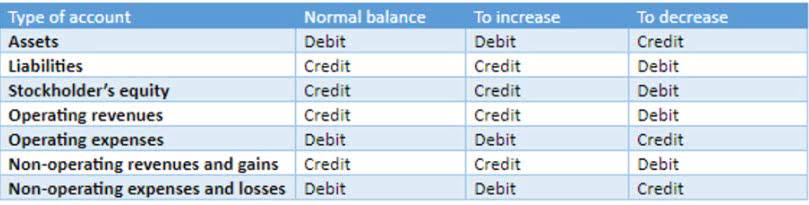
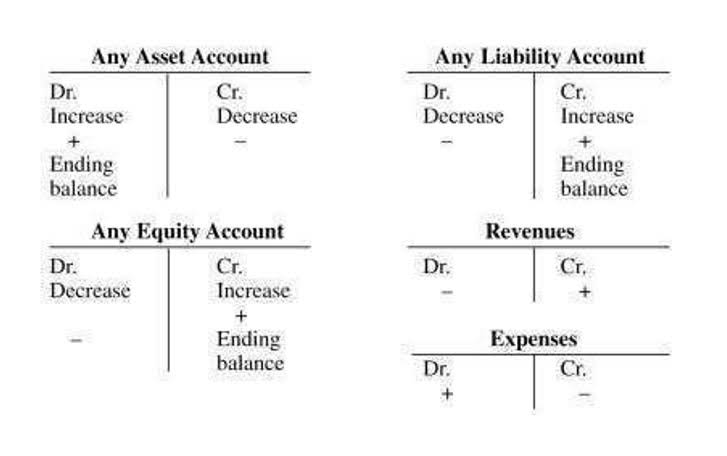
Debits VS Credits: A Simple, Visual Guide

  • You generally must include in your gross income all amounts you receive as rent.
  • That part of the accounting system which contains the balance sheet and income statement accounts used for recording transactions.
  • Cash registers also store transaction receipts, so you can easily record them in your sales journal.
  • The following four bookkeeping practices can help you stay on top of your business finances.
  • Accountants review and adjust the books, prepare final statements, and handle tax and higher level analysis.
  • For example, the electricity bill arriving on January 10 might be the cost of the electricity that was actually used in December.

In other words, the amount allocated to expense is not indicative of the economic value being consumed. Similarly, the amount not yet allocated is not an indication of its current market bookkeeping value. The accounting method under which revenues are recognized on the income statement when they are earned (rather than when the cash is received). Usually financial statements refer to the balance sheet, income statement, statement of comprehensive income, statement of cash flows, and statement of stockholders’ equity. These categories are also referred to as accrual-type adjusting entries or simply accruals.

Why businesses choose TallyPrime accounting software

  • The objective is to be certain that there is consistency between the amounts and that the company’s amounts are accurate and complete.
  • It represents the amount that has been paid but has not yet expired as of the balance sheet date.
  • Bookkeeping refers to the process of recording, organizing, and maintaining a business’s financial transactions.
  • Xero’s cloud accounting software has features and tools to help you run your small business, so you can spend more time doing what you love.
  • Some credit Benedetto Cotrugli and his 1458 book Of Commerce and the Perfect Merchant.
  • Bookkeeping is an essential part of your accounting process for a few reasons.

SuppliesSupplies could be office supplies, manufacturing supplies, packaging supplies or other supplies that are on hand. The cost of the supplies that remain on hand is reported as an asset. Short-term InvestmentsShort-term or temporary investments may include certificates of deposit, bonds, notes, etc. that will mature in less than one year. It may also include investments in the common or preferred stock of another corporation if the stock can be easily sold on a stock exchange. If you are not familiar with debits and credits or if you want a better understanding, we will provide a few insights to help you. You can also visit our Debits and Credits topic outline for further assistance.

what is bookkeeping

What is the difference between bookkeeping and accounting?

Because bookkeeping involves the creation of financial reports, you will have access to information that provides accurate indicators of measurable success. By having access to this data, businesses of all sizes and ages can make strategic plans and develop realistic objectives. Accounting refers to the analysis, reporting and summarizing of the data that bookkeepers gather. Accounting reports give a picture of the financial performance of a business, and determine how much tax is owed. Our partners compensate us for advertisements that appear on our site.

what is bookkeeping

High cost metros in states like New York and California often show higher wages, while industry mix also matters. Construction, professional services, and https://dictel.cl/caltrans-district-3-hiring-associate-accounting/ larger corporate teams tend to pay above median because the work includes more controls, month end processes, and system complexity. The BLS state and area tables are a handy way to compare your region before you negotiate.

what is bookkeeping

what is bookkeeping

These principles ensure that financial statements bookkeeping definition such as the Balance Sheet, Income Statement, and Cash Flow Statement reflect accurate and comparable information. The balance sheet reports the assets, liabilities, and owner’s (stockholders’) equity at a specific point in time, such as December 31. The balance sheet is also referred to as the Statement of Financial Position.

Bookkeeping for Law Firms, Trusted and Expert

law firm bookkeeping in minnesota

From independent attorneys to small and larger practices, we handle your financial management with expertise, so you can focus on serving clients and winning cases, not crunching numbers. Proper accounting ensures billing matches the work performed while remaining transparent for clients. Law firm accounting services bridge the gap, catering expert guidance tailored to the intricacies of the legal industry’s financial management.

Choosing the Right Law Firm Bookkeeping and Accounting Service for Your Firm

law firm bookkeeping in minnesota

The experienced bookkeepers at BooksTime understand the latest legal accounting regulations. They will help you implement trust accounting, ensure prompt invoice submission, and assist with the preparation of accurate statements. With such experts, you may rest easy knowing your finances are in order. Forward-looking law firms embrace transparency in everything from client interactions to financial activity.

law firm bookkeeping in minnesota

Specialized Law Firm Bookkeeping Services Secure. Accurate. Timely.

Our comprehensive bookkeeping service is tailored to the unique needs of law firms. Depending on your service level, it may include client or matter profitability analysis. At Bandicoot, we specialize in Law Firm Accounting Services, providing tailored financial solutions for legal practices. We understand the unique challenges law firms face, law firm bookkeeping from trust accounting and client billing to compliance with bar regulations and tax complexities. With our expertise, we help firms manage their finances efficiently, ensure compliance, and focus on serving their clients.

law firm bookkeeping in minnesota

Industry Products

law firm bookkeeping in minnesota

OLPR has even provided sample reconciliation forms to help lawyers comply. The reason this process is so critical is that it’s the only sure-fire way to catch errors or irregularities. A missed deposit, a math mistake in a ledger, or a check recorded to the wrong client will throw off the three-way balance and alert you that something is wrong. If you have a bookkeeper or assistant, make sure they know this account is different from the general account. Many firms restrict who can initiate trust transactions – often only the lawyer or a senior staffer – as an internal control.

  • Tuesday’s fee debit can be exported to accounting ledgers when ready to be invoiced.
  • When you work with CPN Legal, you can feel confident that our team of CPAs, bookkeepers, controllers, and industry experts understands the challenges you face.
  • By leveraging their expertise, firms can stay compliant, improve cash flow, and reduce the risk of costly financial mistakes.
  • Proper accounting ensures billing matches the work performed while remaining transparent for clients.
  • We pride ourselves on delivering solution-oriented results to lawyers and law firms across the country.

Proxy Statement Pricing: A Guide to Fixed Fees for Public Company Annual Meeting Prep

Partners can compile a list of the most promising clients, determine each team’s expenses, and review pricing approaches. Monthly reporting allows lawyers to analyze business trends, identify inefficient activities, and forecast revenue. As we see, bookkeeping for law firms transforms large volumes of financial information into a structured database for decision-making. Yes, we specialize in managing client trust accounts, ensuring compliance with all relevant regulations and accurate record-keeping. Our detailed approach to trust accounting ensures that your client’s funds are always handled correctly. Successful business owners build teams of skilled professionals who are experts in a particular area.

  • Up-to-date financial information helps analyze software, subscriptions, and administrative costs to identify unnecessary expenditure.
  • At The Legal Accountant, we specialize exclusively in bookkeeping and financial services for law firms and legal professionals.
  • Our proactive approach helps identify potential issues before they become problems, reduces risk, and creates a stable financial foundation that supports smarter decision-making as your firm scales.
  • Look for software, like CosmoLex, that includes integrated document management, trust accounting, time tracking, and secure client portals that allow seamless collaboration.

law firm bookkeeping in minnesota

Keeping up with such resources or attending a CLE on trust accounting every few years is a smart move. It not only keeps you compliant but also signals to malpractice insurers and others that you take fiduciary duties seriously. To put it plainly, most trust accounting problems are preventable with a combination of knowledge, consistency, and care. It’s far better to ask a “dumb question” than to commit a dumb mistake that could jeopardize your license or your clients’ money.

Law Firm Automation 2.0: The Power of a Tailored Legal Tech Stack over an All-in-One Solution

Our team is experienced in handling law firm trust accounting and maintaining compliance with applicable regulations and ethical standards. We implement strong internal controls and accurate reporting processes to help reduce risk and ensure audit-ready financials. Yes—we’re a boutique legal accounting firm that partners exclusively with law firms. While we support firms of all sizes, our specialty is working with 2–5 attorney practices that value sustainable growth, strategic insight, and operational peace.

We pride ourselves on delivering solution-oriented results to lawyers and law firms across the country. By consolidating tasks, calendars, email, and billing in one platform, you reduce administrative overhead and improve operations. This means that law firms can take on more billable work, without the hassle of manual processes.

  • We ensure full compliance with ABA rules and state bar trust regulations.
  • The goal is to safeguard client property and avoid even the appearance that a lawyer might be using client funds for personal or business purposes.
  • Legal practice management software is a specialized tool designed to help law firms streamline their operations, manage client information, and ensure efficient case management.
  • However, accounting is an essential function that helps ensure your firm is profitable, your team is fairly compensated, and your accounts are compliant.
  • Each entry in the register should also identify which client it was for, so you can cross-reference.
  • The losses carry How Bookkeeping for Law Firms Strengthens Their Finances forward indefinitely until fully offset by positive qualified business income.

Helping you simplify, comply, and grow your legal practice with expert financial clarity.

It is the wrong approach, as reliable bookkeeping and accounting are the foundation of long-term prosperity. Professional bookkeeping for law firms enables them to operate in accordance with current regulations and to correctly choose future development strategies. CosmoLex stands out from other legal practice management solutions by offering a unique combination of features specifically designed to meet the needs of law firms. It is an end-to-end cloud-based platform that integrates practice management, billing, accounting, and trust accounting in a way that is seamless, secure, and user-friendly. CosmoLex offers built-in trust accounting so you can manage funds securely without needing third-party software like QuickBooks. At District Advisory, we provide outsourced accounting and advisory services designed specifically for law firms.

Income Statement Examples Using GAAP & IFRS Methods

The format of a contribution margin income statement appears below. The contribution margin income statement only includes variable expenses in the cost of goods sold, and pushes all fixed production costs lower down in the report. The comparative income statement presents the results of multiple reporting periods in adjacent columns.

Non-operating revenues and expenses

Gross profit minus operating expenses will give us the operating income. A multi-step income statement is more organized but more complicated than the single-step format. An income statement summarizes a company’s financial performance.

There is no separate heading for operating and non-operating costs and income. It usually includes evaluating the profit margins, revenue growth, expense control, etc. A lower tax rate signifies efficient tax planning or the use of tax incentives, contributing to higher after-tax profits. The provision for income taxes increased from $699 million in 2021 to $1,132 million in 2022, a 62.2% growth. Tesla’s other income and expenses https://smennerlaw.com/seamlessly-connect-adp-to-quickbooks-desktop-a/ shifted from a positive $135 million in 2021 to a negative $43 million in 2022. This rise signals higher returns on investments or interest-bearing assets, indicating improved income from cash reserves or investments.

With the help of ERP software, preparing an income statement is made a lot easier. Understanding these advantages allows investors, managers, and analysts to better evaluate a company’s financial health and growth potential. Understanding the different types helps businesses present financial information more clearly and aligns with their reporting objectives.

Printable Small Business Income and Expenses Template

Net income is derived from the difference between the two. Suppose ABC is income statement formats a USA-based company. There is no implication that one type of revenue or expense item has priority over another.

Operating Expenses

If your business expenses over the period being examined were higher than your income, the company has made a loss. You’ll sometimes see income statements called https://www.thehubrangsit.com/personal-allowances-worksheet/ a profit and loss statement (P&L), statement of operations, or statement of earnings. An income statement sets out your company income versus expenses, to help calculate profit. This substantial growth showcases the company’s ability to generate more income after accounting for taxes and other expenses.

Service business (consulting firm)

While the objective remains the same, owing to the difference in the nature of the business, few components are different in the income statement. Here we also discuss the definition and income statement format example as per India Companies, US GAAP, and UK GAAP. We will analyze their income statement to see what format they follow. Unilever is a very reputed organization based in the UK and we analyze their income statement to understand what format they follow.

Additional accounting templates

Income Statement provides the basis for measuring performance of an entity over the course of an accounting period. Distribution cost includes expenses incurred in delivering goods from the business premises to customers. Other income consists of income earned from activities that are not related to the entity’s main business. Hence, for a retailer, cost of sales will be the sum of inventory at the start of the period and purchases during the period minus any closing inventory. Conversely, if the same manufacturer earns interest on https://plugins.righthere.com/12-7-horizontal-and-vertical-trend-analysis/ its bank account, it shall not be classified as revenue but as other income. Income statement is prepared on the accruals basis of accounting.

  • This IAS Regulation required companies with securities (debt or equity) trading in the UK regulated market to use IFRS to file their income statements.
  • For instance, a manufacturing company will create an income statement to showcase its expenses and revenue for the year 2023.
  • Then remove the operating expenses mentioned and you get the company’s operating income.
  • In this, the classification of all expenses is mentioned under this head.
  • Income From Continuing Operations excludes profits or losses from discontinued operations, extraordinary items, and other non-recurring events.

The resulting figure is the net income or net loss. Profit and Loss/ Income statement for the period ended _________ Your go-to resource for timely and relevant accounting, auditing, reporting and business insights. You will likely want to customize the Revenue section to highlight your company’s main sources of revenue.

It is, therefore, prepared first of all other financial statements. The two examples provided in the template are meant mainly for small service-oriented businesses or retail companies. The income statement is typically used in combination with a balance sheet statement. GAAP use slightly different terminology and have different disclosure emphases, but the structure—revenue, expenses, profit—is the same. Many companies use a multi‑step structure but borrow SaaS‑style revenue breakdowns or manufacturing‑style COGS detail.

In contrast, GAAP defines unusual transactions as those that are highly abnormal and unrelated to the company’s typical activities. IFRS doesn’t have a definition for unusual or exceptional items and doesn’t allow companies to present or disclose items using these terms. IFRS allows companies to classify expenses based on function or nature.

  • How is profit calculated on an income statement?
  • Therefore, the income statement in India consists of information that only affects the economic decisions of the company.
  • Following operating expenses are other forms of income, known as income from continuing operations.
  • An income statement shows the revenue and expenses of a company and calculates if the company made a profit or loss in a specific period.
  • This post is to be used for informational purposes only and does not constitute legal, business, or tax advice.
  • When presenting selling expenses separately from administrative expenses, the “partly” expenses should be allocated using a reliable basis.

AccountingTools

When rows are added or deleted, the formulas need to be reviewed in order to ensure they are capturing the new items We’ve also included notes on certain line items in order to provide additional information for that line. Save the document so that you always have quick insight into the financial status of your business. Plus, the customizable year columns enable you to compare your net income over a five-year timeline so that you can easily forecast your business’s economic health. The template also shows your monthly ending cash position, so you can avoid any shortcomings.

This IAS Regulation required companies with securities (debt or equity) trading in the UK regulated market to use IFRS to file their income statements. In the UK, companies have been using the International Financial Reporting Standard (IFRS) for filing income statements since 2005. In the US, publicly traded companies must file their GAAP income statements. Similarly, the USA has rules and forms for listing companies’ income statements.

IFRS and GAAP standards for income statement presentation are similar. Operating revenue relates to monies received for the company’s core activity, such as the sale of products or services. It provides a dynamic view of the business operations, indicating how well the company can generate profit from its operations.

Tesla’s net income surged from $5,644 million in 2021 to $12,587 million in 2022. Tesla’s tax rate decreased from 11.02% in 2021 to 8.25% in 2022. In 2022, interest expenses reduced from $371 million to $191 million. For instance, you can find their percentage of sales or also understand their increase or decrease as compared to the previous year as follows. For example, in 2022, Tesla saw significant growth in different areas of revenue.

For example, for future gross profit, it is better to forecast COGS and revenue and subtract them from each other, rather than to forecast future gross profit directly. Finally, we arrive at the net income (or net loss), which is then divided by the weighted average shares outstanding to determine the Earnings Per Share (EPS). Net Income is calculated by deducting income taxes from pre-tax income.

What is Opportunity Cost? How to Calculate With Examples

This concept applies to various aspects of life, including personal finance, business decisions, and even time management. Opportunity costs are a crucial concept to understand when making decisions. Dynamic platform dedicated to empowering individuals with the knowledge and tools needed to make informed investment decisions and build wealth over time. Quantifying benefits and costs is crucial for a thorough analysis.

Explicit costs have a dollar value – they’re traditional business expenses. The importance of opportunity cost can’t be understated. In business terms, risk compares the actual performance of one decision against the projected performance of that same decision. If you determined the difference in revenue generated by each of those two scenarios, you’d be able to find the opportunity cost. As you can see, the concept of opportunity cost is sound, but it isn’t the end all, be all for a discerning entrepreneur.

  • It helps decision-makers contextualize the costs and benefits of their choices by highlighting what could’ve been gained by pursuing other options.
  • If the fund alternative offered a 10% annual return, in a year you would have €110.
  • In this case, the negative result indicates that attending the course is the better decision.
  • When a business must decide among alternate options, they will choose the one that provides them the greatest return.
  • The most daunting challenges of our times, from climate change to the ageing population, demand an entrepreneurial state unafraid to take a gamble.

By considering both quantitative and qualitative factors, you ensure your decision-making process is well-rounded and comprehensive. For example, a strong corporate culture might not directly contribute to financial performance but could enhance employee retention and productivity. But what about qualitative elements that can influence business outcomes? Have you ever thought about how many direct expenses are involved in starting a new business venture? Constraints can significantly influence which options are viable.

  • In this guide, you’ll learn how to calculate opportunity costs, the different types and some real-life examples.
  • Opportunity cost assessments that do not account for risk can result in skewed decisions toward certain options that ultimately prove to be more costly than expected.
  • Direct costs are straightforward and measurable, but indirect ones can be just as significant.
  • By understanding these calculations, the business owner can make an informed decision that aligns with their long-term goals.
  • The cafe option’s implicit cost is the time staff spend going to and from the cafe to buy rounds of coffee for colleagues and visiting clients.

What is the opportunity cost formula?

There are different types of opportunity cost depending on the decision context. In this article, we explain what opportunity cost is, how it is calculated, and provide practical examples to better understand its application in real situations. Use opportunity cost analysis as a guide, but also trust your intuition and consider factors that may not fit neatly into a calculation.

Opportunity cost vs sunk cost

Although this result might seem impressive, it is less so when you consider the investor’s opportunity cost. This theoretical calculation can be used to compare the actual profit of the company to what its profit might have been had it made different decisions. In economics, risk describes the possibility that an investment’s actual and projected returns will be different and that the investor may lose some or all of their capital. If the business decides to go with the securities option, its investment would theoretically gain $2,000 in the first year, $2,200 in the second, and $2,420 in the third.

The usefulness of opportunity cost in decision-making is largely predicated on making predictions about the outcomes of each potential choice and the value that can be garnered by taking a given path. The opportunity cost equation is an important tool for those who wish to make well-informed decisions. Once the values of the alternatives have been determined, the opportunity cost can be calculated. In this simplified case, the opportunity cost of choosing Python is the potential benefit lost from choosing JavaScript. Ultimately, investment decisions should be based on a careful analysis of the company’s needs, goals, and resources. The accounting profit is reported on a company’s financial statements and is used to calculate its taxable income.Economic profit, on the other hand, is the difference between a company’s total revenue and the sum of its explicit and implicit costs.

Optimized decision-making

List all possible options available for a business decision. It highlights the potential returns from investing resources in one option over another. Opportunity cost is the benefit that could have been gained from an option that was not chosen. It’s a fundamental concept in economics that helps individuals and businesses evaluate the relative costs of different choices.

Step 2: Determine Potential Benefits

With an out-of-town storage facility, you may end up paying for your team to sit in traffic rather than spending their time on client relationships, potentially impacting retention and sales. While implicit cost isn’t a direct cash outlay, it represents a lost income opportunity. For example, if you’re comparing two storage facilities, you’ll consider explicit costs like rent, outgoings, fit-out and staff parking.

Time value of money is the idea that money available today is worth more than the same amount of money available in the future, because money today can be invested and earn interest. Shadow prices are hypothetical prices that reflect the marginal value of a resource in its best alternative use. The marginal cost of studying for an extra hour is the decrease in your well-being, not your total well-being. The next best alternative is not always obvious or easy to compare, so it may require some research or estimation. But the value of those alternatives may depend on how much land is available and how much demand there is for housing, manufacturing, or recreation.

So the opportunity cost of changing fields may include more tuition and training time, but also the cost of the job this is left behind (as well as the potential salary of a job in the new field). ” So for many investors, the opportunity cost of an investment is the return on the S&P 500, and that’s why investors are so focused on “beating the market,” since it’s their opportunity cost. Even if you select the 10 percent return – and therefore earn a better overall return – your opportunity cost is still the next best alternative. The opportunity cost of investing in one stock over another can differ because investments have varying risks and rewards. While the definition of opportunity cost remains the same in investing, the concept is a bit more nuanced because of potential differences among investments.

In the realm of primary education, the emergence of data-driven decision-making marks a… The most daunting challenges of our times, from climate change to the ageing population, demand an entrepreneurial state unafraid to take a gamble. Rather, it is a complementary and flexible tool that can help us to improve our decision making process and quality by providing us with a clear and systematic framework and criteria. It helps us to evaluate the relative value of each option by considering what we have to give up in order to choose it. Compare the alternatives and choose the best one.

Opportunity cost reflects the possibility that the returns of a chosen investment will be lower than the returns of a forgone investment. One of the most dramatic examples of opportunity cost is a 2010 exchange of 10,000 bitcoins for two large pizzas—at the time worth about $41. For example, comparing a Treasury bill to a highly volatile stock can be misleading, even if both have the same expected return (an opportunity cost of 0%).

What Is an Example of Opportunity Cost in Investing?

When making decisions, it’s like choosing between planting a tree that will take years to grow and bear fruit versus picking an apple from a nearby tree. In essence, assessing the benefits and costs requires a nuanced approach that acknowledges the value of hard data while also appreciating the impact of softer metrics. It’s not just about what we spend money on but also what we give up when choosing one option over another. This illustrates the power of leverage–you can make money by borrowing if your investment of the borrowed money yields a higher rate of return than the interest charged on the debt. Her financial advisor projects that investments in the stock market will yield an 11% return. Moreover, money allocated to servicing debt can’t be spent on investing in the business or pursuing other investment opportunities, such as the stock and bond markets.

You might focus too much on direct expenses and forget to factor in time, brand reputation, or employee satisfaction. Let’s say your team spends 40 hours monthly chasing payments, costing $5,000 in internal resources. Mitigating this risk requires proactive strategies like enforcing late fees or using Volopay’s payment tracking system to flag overdue invoices and follow up faster.

We encourage all users to conduct their own independent research and due diligence before making any decisions based on the information provided here. In contrast, sunk cost refers to money that has what is cycle efficiency already been spent and cannot be recovered, like past expenses on failed projects. For example, selecting one project means losing potential gains from the alternative.

How to identify the relevant costs and benefits of each alternative. One of the most important aspects of cost-opportunity analysis is evaluating the trade-offs between different alternatives. The opportunity cost of choosing plan F is the forgone benefit of choosing plan E, which is $500 per month ($1,000 – $500). The opportunity cost of choosing plan E is the forgone benefit of choosing plan F, which is $6,000 per year ($12,000 – $6,000).