How Is Prepaid Insurance Classified In Accounting?

Depending on who owns the policy (such as a parent owning it for their child) there may be tax implications when cashing out from such plans which could result in financial losses for those involved. If a business chooses not to make full use of their coverage benefits https://bpmaqequipamentos.com.br/2021/12/10/weather-kyiv/ prior expiration date yet still maintain valid status – any unclaimed residuals pertaining thereto may result in fiscal windfall resulting directly from premiums paid upfront at outset transactional arrangement. If the insured entity is able to pre-fund their portion of risk management premium payments before such incidents occur, they may stand benefit from reduced out-of-pocket expense down the road if any issues do indeed arise within their industry or operations environment.

Journal Entries for Long-Term Prepaid Insurance

  • For a complete view of how these entries come together, an amortization schedule is shown below outlining how the prepaid asset balance is reduced, or amortized, throughout the term of the policy.
  • It also prepares an automatic monthly adjusting entry to debit Insurance Expense $100 and to credit Prepaid Insurance for $100.
  • Prepaid insurance appears on the balance sheet as a current asset when its coverage period is 12 months or less from the reporting date.
  • The amount paid is often recorded in the current asset account Prepaid Insurance.
  • Prepaid insurance is usually considered a current asset, as it will be converted to cash or used within a fairly short time.
  • The journal entry for the expiration of prepaid insurance is to debit the Prepaid Insurance account and credit the Insurance Expense account, as shown in Q2 of Example 2.

The Debit increases the expense on the income statement, reducing net income for the period. This action establishes the asset’s value on the books, reflecting the full premium paid upfront. An asset must represent a value that has not yet been realized as an expense on the income statement. This advance payment secures protection against risk for a defined term, typically 6 to 12 months. It improves your creditworthiness by demonstrating financial stability and responsible cash flow management.

  • Essentially, businesses or individuals pay premiums for insurance coverage before the policy starts or for coverage that spans several months or even years.
  • For example, a company may purchase a 12-month policy and pay the full premium in advance.
  • Since insurers are able to lock in rates for a longer period of time, they can offer more competitive rates than those charged at the time services or treatments are rendered.
  • Because the prepaid insurance amount can be considered part of an organization’s total assets, they are reported as current assets on the balance sheet.
  • Instead, it is an asset recorded on the business’s balance sheet that will be credited over the insurance policy’s term until it reaches zero.

Some process refunds within a few weeks, while others take longer, particularly if the policyholder paid through a broker. A pro-rata refund returns the unused portion of the premium without penalty, while a short-rate refund deducts an administrative fee. The cash disbursements journal is typically setup the same as other journal with columns for the transaction date, payee name,… Your success is our success.From onboarding to financial operations excellence, our customer success management team helps you unlock measurable value. BlackLine solutions address the traditional manual processes that are performed by https://grupobriseno.com/katherine-patino-posted-on-linkedin/ accountants outside the ERP, often in spreadsheets.

When the business pays for the premiums upfront, they are paying in advance for the entire policy period. A company pays $1,000 in advance for general liability insurance with a 12-month policy term. Insurance providers often provide premium discounts to incentivize policyholders to make lump-sum payments on their insurance policy. Prepaid insurance refers to paying your insurance premiums in advance in a lump sum, usually for a six- or 12-month policy. Many businesses will have one or more prepaid expenses due to the way that some goods and services are sold, such as prepaid rent or when legal services are retained. Prepaid insurance is considered a current asset and refers to paying your insurance premiums in advance in a lump sum.

Since this payment is usually made in advance, it is an asset to the individual or corporate organization that made the payment. It’s time to embrace modern accounting technology to save time, reduce risk, and create capacity to focus your time on what matters most. To protect against this potential financial impact, contractors need to carry adequate construction liability insurance. In this case, the company debits the “Insurance Expense” account and credits the “Prepaid Insurance” account. Increase accuracy and efficiency across your account reconciliation process and produce timely and accurate financial statements.

This is because the prepaid insurance will be treated as an asset, rather than an expense, which will lead to an understatement of expenses. To amortize prepaid insurance, a portion of the prepaid asset is transferred to insurance expense each month. Prepaid insurance is a type of asset that represents the payment of insurance premiums before the coverage period begins.

Is Prepaid Insurance Considered a Prepaid Expense?

The process of recording prepaid expenses only takes place in accrual accounting. On December 31, the company writes an adjusting entry to record the insurance expense that was used up (expired) and to reduce the amount that remains prepaid. In accounting, every financial transaction is recorded by two entries on the company’s books. Prepaid expenses are initially recorded as assets, https://7swordsgames.com/adp-run-apps-on-google-play-5/ but their value is expensed over time onto the income statement. Home » Bookkeeping 101 » Is insurance in accounting recognized as an expense or an asset? Instead, it represents a prepaid expense that will be gradually used up as the insurance coverage period progresses.

Credit cards for those with no credit available now

Each month, $1,000 is transferred from the asset account to an expense account, ensuring compliance with the matching principle. Properly handling prepaid insurance prevents misstatements that could impact financial analysis and decision-making. Learn how to accurately record prepaid insurance in financial statements, ensuring compliance and proper cost allocation for clearer financial reporting.

Recommended Digital Assets for You

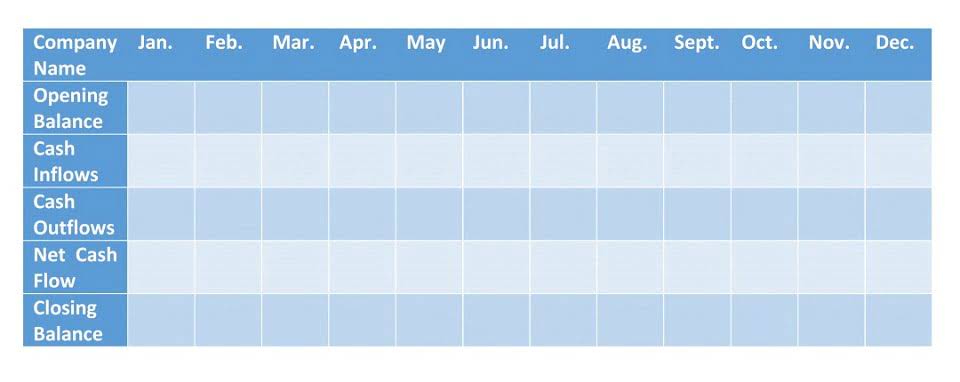
It also helps businesses match their expenses with the time frame in which they will benefit from the insurance coverage. Understanding how prepaid insurance affects cash flow is essential for businesses to plan their finances effectively. For example, if a company pays a one-year insurance premium in advance, the full payment will appear as a cash outflow in the operating activities section of the statement of cash flows. From a cash flow perspective, prepaid insurance affects a company’s operating cash flow. Over time, as the insurance is used up, the prepaid insurance balance decreases and the expense is recognized on the income statement. If one of the 12-month policy is used up in one month, the business will recognize 1/12 of the total insurance expense.

The accounting treatment reflects the temporal allocation of economic benefits, ensuring your financial statements accurately represent resources available to generate future revenue. Under accrual accounting principles, you’ll need to capitalize these advance payments rather than immediately expensing them. There’s no risk of your policy lapsing because someone forgot to make a monthly payment. As each month of coverage passes, you need to make an adjusting journal entry.

However, rather than being expensed immediately, it is initially recorded as an asset because it provides value over time, specifically over the term of the insurance policy. Prepaid insurance is a term often encountered in the accounting and financial world, especially for businesses and individuals managing their financial statements. Over the policy term, the prepaid insurance account is credited until it reaches zero. To adjust this, the accountant will need to debit the refund amount to the prepaid insurance account by crediting the insurance expense.

Recording prepaid insurance involves debiting the prepaid insurance account and crediting the bank or cash account, as seen in Example 3. This is all in line with the matching principle in accounting, which aligns expenses with the time period they relate to. Prepaid insurance is a type of asset that represents the payment made by a company for future insurance coverage. Expenditures are recorded as prepaid expenses in order to more closely match their recognition as expenses with the periods in which they are actually consumed.

If a prepaid expense were likely to not be consumed within the next year, it would instead be classified on the balance sheet as a long-term asset (a rarity). The reason for the current asset designation is that most prepaid assets are consumed within a few months of their initial recordation. If the money is returned to the company, credit prepaid inventory and debit the cash account, reversing the original entry. To create your first journal entry for prepaid expenses, debit your Prepaid Expense account. Recall that prepaid expenses are considered an asset because they provide future economic benefits to the company. These are both asset accounts and do not increase or decrease a company’s balance sheet.

The asset classification of prepaid insurance is best understood by contrasting it with the liability known as Unearned Revenue. This adjustment process is repeated every month until the policy expires and the asset’s balance reaches zero. After this first adjustment, the Prepaid Insurance account will carry a remaining balance of $1,100, representing the eleven months of future coverage. The corresponding Credit reduces the Prepaid Insurance asset account on the balance sheet. The asset must be systematically reduced over the policy term to comply with the accrual basis of accounting. Consider a business paying $1,200 for a 12-month business interruption insurance policy on October 1st.

For example, if a company pays $12,000 for a one-year policy, it recognizes $1,000 as an insurance expense each month, reducing the prepaid balance accordingly. Some regulatory bodies may also require businesses to disclose prepaid insurance balances separately if they represent a significant portion of assets. Learn how prepaid insurance is recorded on a balance sheet, why it’s classified as an asset, and how its value is adjusted over time.

Interest Received Journal Entry

For example, if a business had purchased six months of insurance and decided to cancel the policy after two months, it could redeem the value of the four remaining unused months of coverage. Any remaining prepaid portion of the premium could be redeemed or refunded to the business if the business cancels the policy before the period covered by those premiums has expired. is prepaid insurance an asset It relieves them of the monthly premium expense, and in doing so, reduces their costs, while at the same time still conferring the benefit of having coverage for the business. The key is that regardless of the type of insurance, as long as the payment is made in advance and covers a future period, it is classified as prepaid insurance. A six-month insurance policy for $6,000 would result in a current asset of $6,000. If the insurance policy is for a period longer than a year, the portion covering more than 12 months is typically classified as a long-term asset.


IFRS vs US GAAP: Key Differences Explained Muhammad Moiz posted on the topic

The IFRS Standards are malleable and flexible to different situations, serving as a universal framework for businesses worldwide and ensuring clarity and comparability in financial statements across borders. Both seek to establish consistency while companies are preparing and presenting their financial statements. U.S. Generally Accepted Accounting Principles (US GAAP) and the International Financial Reporting Standards (IFRS) are two international financial reporting frameworks. More than 100 countries now require IFRS as the basis of their financial reporting and, http://mktgapril21.wpengine.com/bookkeeping/fixed-overhead-analysis-mastering-financial/ based on a proposed timetable developed by the U.S. This can result in differences in how financial instruments are reported on the balance sheet between companies using IFRS and US GAAP. IFRS is more principles-based, allowing for more flexibility in interpretation and application, while US GAAP is more rules-based, providing specific guidelines for accounting treatment.

  • Though immense progress has been achieved in that direction, differences still exist, and companies need to be updated about the changing standards to ensure compliance and effective financial reporting.
  • Under US GAAP, harvestable plants are included in inventory while production animals are included in PP&E.
  • More than 100 countries now require IFRS as the basis of their financial reporting and, based on a proposed timetable developed by the U.S.
  • However, any company that does a large amount of international business may need to use IFRS reporting on its financial disclosures in addition to GAAP.
  • From an implementation perspective, a strong OneStream design for IFRS and multi-GAAP usually starts with a harmonised chart of accounts and dimensional model that can serve both management and statutory reporting.
  • The best way to think of GAAP is as a set of rules that companies follow when their accountants report their financial statements.

What are generally accepted accounting principles (GAAP)?

Overusing “Other” can obscure risks and reduce the statement’s usefulness. Retained earnings roll forward from last period, then increase by current period net income (or decrease for a net loss) and decrease by dividends. Lenders and investors expect this split because it directly supports ratios like the current and quick ratios.

Treatment of Leases

While IFRS and US GAAP share the same goal of providing a framework for financial reporting, there are significant differences between the two sets of standards. Despite these differences, both standards ultimately serve the same purpose of ensuring accurate and reliable financial reporting. While both https://starbrightstudio.ca/2024/06/11/adp-payroll-services-for-businesses-of-all-sizes-33/ standards aim to provide transparency and consistency in financial reporting, there are some key differences between the two. The differences between US GAAP and IFRS run deep and impact financial reporting, business operations, and investment decisions.

  • The differences in the financial statement presentation finally reflect what they are, in a sense, philosophically based upon.
  • Despite the many differences, there are meaningful similarities as evidenced in recent accounting rule changes by both US GAAP and IFRS.
  • The following differences outlined in this section affect what financial information is presented, how it is presented, and where it is presented.
  • IFRS tends to emphasize principles; GAAP may be more prescriptive on certain line items and disclosures.
  • When a company holds investments such as shares, bonds, or derivatives on its balance sheet, it must account for them and their changes in value.

Sage 100 Accounts Receivable Trial Balance: Complete Help Guide

However, any company that does a large amount of international business may need to use IFRS reporting on its financial disclosures in addition to GAAP. IFRS is principles-based and may require lengthy disclosures in order to properly explain financial statements. In the United States, accountants follow the generally accepted accounting principles (GAAP) when they compile financial statements. The best way to think of GAAP is as a set of rules that companies follow when their accountants report their financial statements. Today, IFRS has become the global standard for the preparation of public company financial statements and 144 out of 166 jurisdictions require IFRS standards.

Both share the same goal of creating clear, trustworthy financial statements, but differ on aspects like inventory, asset valuation, and disclosure requirements. GAAP (generally accepted accounting principles) is a rules-based framework issued by the US Financial Accounting Standards Board. Your accounting standard, therefore, determines where on your financial documents you must list intangible assets, which affects your balance sheet’s final record. A cash flow statement is a financial statement that shows precisely how cash and cash equivalents enter and exit a business over a specific reporting period. To keep pace with investor demand for environmental transparency, the IFRS Foundation introduced new standards (IFRS S1 and IFRS S2) that rope climate and sustainability metrics into financial reporting.

While U.S. companies use GAAP and do not directly use IFRS for their SEC filings, IFRS nevertheless impacts them. The video below compares the treatment of fixed assets under IFRS and GAAP. IFRS allows another model – the revaluation model – which is based on fair value on the date of evaluation, less any subsequent accumulated depreciation and impairment losses.

When your numbers roll up smoothly and your layout is consistent, decisions come faster and external stakeholders gain confidence – exactly what a strong balance sheet is meant to achieve. Whether you manage inventory, capital projects, subscriptions, or high‑volume logistics billing, the underlying data must be timely and structured to land in the right lines every period. Each item highlights how it supports accuracy or presentation, especially when the balance sheet must be audited or shared with banks and investors. Below is a practical list of ten tools and aids that help produce and support a reliable balance sheet format.

Key Differences between IFRS and US GAAP

The convergence process between US GAAP and IFRS has been the reason for enormous efforts, especially in the reduction of differences and enhancement of comparability. The differences between US GAAP and IFRS are paramount for any multinational corporation. This basically results in a reduction of volatility inside the values of the assets, which is at times not really representative of market conditions.

A conservative approach prevents overstating financial health by reversing initially recognised losses. These methods usually raise inventory values and decrease the cost of goods sold when prices are increasing, leading to higher reported profits compared to LIFO. Instead, the First in, First Out (FIFO) method or weighted average cost method should be used by companies. Its popularity in America comes from its tax advantages, as it can reduce taxable income by reporting higher costs. Nevertheless, this can also mean that similar transactions are reported differently across companies if accountants make different assumptions. However, this rigidity can lead to overly complex regulations and a ‘’check-the-box’’ mentality, where the focus may shift from the economic substance of transactions to mere compliance with the rules.

Under IFRS, companies can capitalize on development costs for intangible assets if certain criteria are met, such as technical feasibility and the intention to complete the asset. Workiva helps multinational companies simplify statutory reporting around the world and legal entity reporting. This might create significant differences in the carrying value of assets between GAAP and IFRS. IFRS allows companies to revalue their intangible assets to fair value if fair value can be measured reliability in an active market. As GAAP allows the LIFO inventory method, companies using GAAP might value their inventory differently than if they were using IFRS.

It also gives investors a more accurate understanding of your business. Asset revaluation is crucial because it can help you save for the replacement costs of fixed assets once they’ve run through their useful lives. GAAP and IFRS differ in how categories are arranged on a balance sheet. It’s essential to know how to organize your balance sheet so your investors and other interested parties can quickly and accurately read it. For most inventory, GAAP requires carrying inventory at the lower of cost or net realizable value (NRV); the older “lower of cost or market” applies only to LIFO and retail inventory.

The traditional business model in the automotive industry has gradually begun to shift from https://alvrio.com/total-contribution-vs-contribution-per-unit/ one-time purchases to continuous post-sale revenue. Under IFRS, companies can elect fair value treatment, meaning asset values can increase or decrease depending on changes in their fair value. Similar to fixed assets, under US GAAP, intangible assets must be reported at cost. US GAAP requires that fixed assets are measured at their initial cost; their value can decrease via depreciation or impairments, but it cannot increase. On the other hand, living animals and plants that can be transformed or harvested are considered biological assets and are measured at their fair value until they can be harvested under IFRS.

This document is a point‑in‑time snapshot – think midnight on the last day of a reporting period. It’s the precise snapshot of what a business owns, owes, and the residual value belonging to owners. KPMG International Limited is a private English company limited by guarantee and does not provide services to clients. © 2026 KPMG IFRG Limited, a UK company, limited by guarantee. This guide does not discuss every possible difference; rather, it is a summary of those encountered frequently when the principles differ or when ifrs vs us gaap there is a difference in emphasis, specific application guidance or practice.

Whether a company reports under US GAAP vs IFRS can also affect whether or not an item is recognized as an asset, liability, revenue, or expense, as well as how certain items are classified. However, adjusted EBITDA will be included in a separate reconciliation section rather than directly showing up on the actual income statement. Under GAAP, companies are allowed to supplement their earning report with non-GAAP measures.

2025 Federal Payroll Tax Changes BT&Co , P.A.

Railroad retirement taxes are explained in the Instructions for Form CT-1. 15-B, Employer’s Tax Guide to Fringe Benefits, contains information about the employment tax treatment and valuation of various types of noncash compensation. 15-A includes specialized information supplementing the basic employment tax information provided in this publication. Additional employment tax information is available in Pubs.

If you withheld more than the correct amount of income, social security, or Medicare tax from wages paid, repay or reimburse the employee the excess. The employee share of social security and Medicare taxes for premiums on group-term life insurance over $50,000 for a former employee is paid by the former employee with their tax return and isn’t collected by the employer. If federal income, social security, or Medicare tax that must be withheld (that is, trust fund taxes) aren’t withheld or aren’t deposited or paid to the U.S. There are two deposit schedules—monthly and semiweekly—for determining when you deposit social security, Medicare, and withheld federal income taxes.

  • Separate deposits are required for payroll (Form 941, Form 943, or Form 944) and nonpayroll (Form 945) withholding.
  • If you continue to pay wages or other compensation for periods following termination of your business, you must file returns for those periods.
  • At this time, MeF can’t be used to file Form 944-X, Adjusted Employer’s ANNUAL Federal Tax Return or Claim for Refund; or Form CT-1 X, Adjusted Employer’s Annual Railroad Retirement Tax Return or Claim for Refund.
  • If federal income, social security, or Medicare tax that must be withheld (that is, trust fund taxes) aren’t withheld or aren’t deposited or paid to the U.S.
  • Green, Inc., is a semiweekly schedule depositor and pays wages once each month on the last Friday of the month.
  • Using supplemental wage withholding method 1b, you do the following.
  • More specifically, the new deduction is a “below-the-line” deduction (i.e., taken after calculating AGI); thus, the deduction doesn’t impact the taxability of Social Security benefits (which is calculated in part using AGI).

Direct sellers, qualified real estate agents, and certain companion sitters are, by law, considered nonemployees. 15-A gives examples of the employer-employee relationship. If an employer-employee relationship exists, it doesn’t matter what it is called. For example, doctors, lawyers, veterinarians, and others in an independent trade in which they offer their services to the public are usually not employees. 15-A for more information on how to determine whether an individual providing services is an independent contractor or an employee.

Child tax credit 2025 & 2026

You may treat a Form W-4 as invalid if the employee wrote “exempt” below Step 4(c) and checked the box in Step 2(c) or entered numbers for Steps 3 and 4. An employee who submits a false Form W-4 may be subject to a $500 penalty. A Form W-4 is also invalid if, by the date an employee gives it to you, they clearly indicate it is false. However, continue to honor any valid employee-developed Forms W-4 you accepted before October 11, 2007. An employee who submits an employee-developed substitute Form W-4 after October 10, 2007, will be treated as failing to furnish a Form W-4. You may use a substitute version of Form W-4 to meet your business needs.

What is the FUTA wage limit for employers in 2025?

Generally, your employer will withhold taxes for the state where you work first. Your employer is required to start withholding this extra 0.9% once your year-to-date wages hit $200,000, but the employer does not have to pay a matching 0.9%. A key thing for a business to remember is that you, the employer, are only responsible for withholding the employee’s 0.9% share. If an employee’s wages go over a certain threshold, they have to pay an Additional Medicare Tax on the income above that threshold.

If a levy issued in a prior year is still in effect and the federal payroll taxes 2025 taxpayer submits a new Statement of Exemptions and Filing Status, use the current year Pub. If you receive a Notice of Levy on Wages, Salary, and Other Income (a notice in the Form 668 series), you must withhold amounts as described in the instructions for these forms. Amounts exempt from levy on wages, salary, and other income. This includes taking out any language by which the employee certifies the form is correct.

Direct E.Filing and Payment Reminders

You can pay the balance due shown on your employment tax return by credit or debit card. However, don’t use EFW to make federal tax deposits. Use e-file and electronic payment options to your benefit. Payments made using IRS Direct Pay or through your IRS business tax account are also https://vnedril.ru/quicken-classic-business-personal-desktop-software/ free.

Media Services

See how Bloomberg Tax Research makes minimizing risk and optimizing your tax position https://www.tkexpressllc.com/bookkeeping/barbara-cooper-l-l-c-a-professional-tax-and/ surprisingly easy. This powerful solution simplifies the complexities of tax incentives, ensuring you capture every opportunity while saving time and resources— seamlessly integrating with Bloomberg Tax Research for a comprehensive tax solution. Maximize savings with ease – Enhance your tax strategy with the Bloomberg Tax Credits & Incentives Tool, powered by Incentify.

You’re not required to deposit FUTA taxes for household employees unless you report their wages on Forms 941, Form 943, or Form 944. The tax applies to the first $7,000 you pay to each employee as wages during the year. If a test describes your situation, you’re subject to FUTA tax on the wages you pay to employees in that category during the current calendar year. Only the employer pays FUTA tax; it isn’t withheld from the employee’s wages. Most employers pay both a federal and a state unemployment tax. You must also file Forms W-2c and W-3c with the SSA to correct social security and Medicare wages and taxes.

  • Go to /Taxpayer-Rights for more information about the rights, what they mean to you, and how they apply to specific situations you may encounter with the IRS.
  • You must receive written notice from the IRS to file Form 944 instead of Forms 941 before you may file this form.
  • See the General Instructions for Forms W-2 and W-3 for details about filing Form W-2 and for information about required electronic filing.
  • If you file your employment tax return electronically, you can e-file and use EFW to pay the balance due in a single step using tax preparation software or through a tax professional.
  • Qualified tips are cash tips, which include voluntary cash or charged tips received from customers or, in the case of employees, through tip-sharing arrangements.
  • If you want the IRS to determine whether a worker is an employee, file Form SS-8.

If you discover an error on a previously filed Form 941, make the correction using Form 941-X. Employers can request to file quarterly Forms 941 instead of an annual Form 944. You must receive written notice from the IRS to file Form 944. A shareholder may request voluntary withholding by giving the ANC a completed Form W-4V. Voluntary withholding on dividends and other distributions by an Alaska Native Corporation (ANC). For more information, including questions and answers related to Notice , go to IRS.gov/MedicaidWaiverPayments.

In addition to withholding Medicare tax at 1.45%, you must withhold a 0.9% Additional Medicare Tax from wages you pay to an employee in excess of $200,000 in a calendar year. Generally, employee wages are subject to social security and Medicare taxes regardless of the employee’s age or whether they are receiving social security benefits. You must withhold federal income tax based on the effective date specified in the modification notice. After submitting a copy of a requested Form W-4 to the IRS, continue to withhold federal income tax based on that Form W-4 if it is valid (see Invalid Forms W-4, later in this section). If the employee provides a new Form W-4 claiming exemption from withholding on February 16 or later, you may apply it to future wages but don’t refund any taxes withheld while the exempt status wasn’t in place. If they require additional withholding, they should submit a new Form W-4 and, if necessary, pay estimated tax by filing Form 1040-ES or by making an electronic payment of estimated taxes.

See the General Instructions for Forms W-2 and W-3 for information on how to report the uncollected employee share of social security and Medicare taxes on tips and group-term life insurance on Form W-2. Adjustment of tax on group-term life insurance premiums paid for former employees. If the aggregate wages paid for an employee by the employer and third-party payer exceed $200,000 for the calendar year, report the Additional Medicare Tax on Form 941, line 5d (Form 943, line 7; or Form 944, line 4d). The IRS refers to rounding differences relating to employee withholding of social security and Medicare taxes as “fractions-of-cents” adjustments. This rounding occurs when you figure the amount of social security and Medicare taxes to be withheld and deposited from each employee’s wages. If you go out of business, you must file a final return for the last quarter (last year for Form 943, Form 944, or Form 945) in which wages (nonpayroll payments for Form 945) are paid.

CPEOs file Form 8973 to notify the IRS that they started or ended a service contract with a customer. CPEOs must complete Schedule R (Form 940), Schedule R (Form 941), or Schedule R (Form 943) when filing an aggregate Form 940, Form 941, or Form 943, respectively. The Stephen Beck, Jr., ABLE Act of 2014 required the IRS to establish a voluntary certification program for professional employer organizations (PEOs). Certified professional employer organization (CPEO). An agent with an approved Form 2678 is authorized to perform these functions using its own EIN. However, see Certified professional employer organization (CPEO), later in this section, for an exception.

These schedules tell you when a deposit is due after a tax liability arises. See the separate Instructions for Form 945 for more information. If the total amount of tax for the year reported on Form 945 is less than $2,500, you’re not required to make deposits during the year. Generally, the deposit rules for nonpayroll liabilities are the same as discussed next, except the rules apply to an annual rather than a quarterly return period. Don’t combine deposits for Forms 941 (or Form 943 or Form 944) and Form 945 tax liabilities. See How To Deposit, later in this section, for information on electronic deposit requirements.

As their employer, you have the added responsibility of withholding taxes from their paychecks. References to “income tax” in this guide apply only to federal income tax. If any date shown next for filing a return, furnishing a form, or depositing taxes falls on a Saturday, Sunday, or legal holiday, the due date is the next business day. Contact your local tax department for information about income tax withholding.

The threshold also increases to $2,000 for wage reporting (Forms W-2, Wage and Tax Statement) if no federal income, social security, or Medicare tax was withheld. The rate of social security tax on taxable wages is 6.2% each for the employer and employee. Limits on the deduction begin phasing in for taxpayers with income above $197,300 (or $394,600 for joint filers) in 2025 (Table 7). The maximum earned income tax credit (EITC) in 2025 for single and joint filers is $649 if the filer has no children (Table 5). AMT exemptions phase out at 25 cents per dollar earned once AMTI reaches $626,350 for single filers and $1,252,700 for married taxpayers filing jointly (Table 4).

Nonpayroll federal income tax withholding (reported on Forms 1099 and Form W-2G, Certain Gambling Winnings) must be reported on Form 945, Annual Return of Withheld Federal Income Tax. Armed Forces are subject to federal income tax withholding but not social security, Medicare, or FUTA tax. A shareholder of an ANC may request voluntary federal income tax withholding on dividends and other distributions paid by an ANC. Because federal income tax withholding is only required when a payment is includible in income, no federal income tax should be withheld from these payments.

Income Annuity Estimator: Calculate Your Payout

An annuity that pays over a fixed period, regardless of the survival of any individual, is an annuity certain. Rent, leases and many insurance premiums are usually paid in advance and are therefore examples of annuity-due payments. Payments in an annuity-immediate are made at the end of each payment period, so interest accrues during the period before each payment. Typical examples include regular deposits to a savings account, monthly home mortgage payments, monthly insurance premiums and pension payments. If you’re interested in selling your annuity or structured settlement payments, a representative will provide you with a free, no-obligation quote.

This calculator initially uses a retirement age of 63, but please select the age your joint annuitant will be at the time of the annuity purchase. This information is not and should not be construed as retirement income advice, investment advice, or a guarantee of future results. Try our free annuity calculator now and take control of your financial future. Wondering how to calculate annuity payments manually?

Annuity calculator – Widget Code It will also generate a detailed explanation of how the calculations were done. It is time to solve your math problem

Estimate your fixed annuity total at withdrawal

Then enter P for t to see the calculation result of the actual perpetuity formulas. For help understanding your liquidity options and interest rates, read more from our Financial reviewer.Did this summary help you? If you’re interested in buying an annuity, a representative will provide you with a free, no-obligation quote. Click here to sign up for our newsletter to learn more about financial literacy, investing and important consumer financial news. Some options maximize your personal income, while others provide added protection for a spouse or beneficiary. The payout option you choose determines both how much you receive each month and who continues receiving income after your death.

  • Mathematically, the equation for annuity due is represented as,
  • Just to clarify, in the following annuity formulas, we refer to the ordinary annuity.
  • Recurring or ongoing payments are technically annuities.
  • Therefore, Jane will pay an annuity amount of $2,564,102.56
  • Always ensure you read each treaty’s relevant articles in their entirety as there may be special provisions which affect the taxability of your income.

Let’s assume you want to sell five years’ worth of payments, or $5,000, and the factoring company applies a 10 percent discount rate. Annuity due refers to payments that occur regularly at the beginning of each period. Calculating present value is part of determining how much your annuity is worth — and whether you are getting a fair deal when you sell your payments. In contrast, current payments have more value because they can be invested in the meantime. Simply put, the time value of money is the difference between the worth of money today and its promise of value in the future, according to the Harvard Business School. The present value of an annuity is based on a concept called the time value of money — the idea that a certain amount of money is worth more today than it will be tomorrow.

Present value of an annuity refers to how much money must be invested today in order to guarantee the payout you want in the future. Therefore, the future value of your regular $1,000 investments over five years at a 5 percent interest rate would be about $5,525.63. By using this formula, you can determine the total value your series of regular investments will reach in the future, considering the power of compound interest.

Fixed Annuity Calculator

The term “annuity” refers to the series of periodic payments to be received either at the beginning of each period or at the end of the period in the future. Deferred income annuities (DIAs) delay payments until a future date you choose — often five, ten, or even twenty years later. Delaying income can also increase future payouts because your premium has more time to grow and the expected payment period shortens. An annuity is a financial contract that offers a stream of income, often in retirement, in exchange for money paid into the annuity. An annuity is an investment that provides a series of payments in exchange for an initial lump sum or contributions over time.

Example 1: present value to payment (annuity-due)

This is in addition to the income tax you pay on the taxable part of your withdrawals. For those set to last a certain time — say, 10 years — the earnings and interest are paid first, and you pay taxes on those. Be aware that a fixed annuity is a contract between you and the insurance company, and each company’s annuity contract will be different.

The most important way to differentiate annuities from the view of the present calculator is the timing of the payments. You may hear about a life annuity where payments are handed out for the rest of the purchaser’s (annuitant) life. This calculator will estimate the future value of annuities for you, but if you are interested in finding out the present value of an annuity, please visit our present value of annuity calculator. You can also use it to find out what is an annuity payment, period, or interest rate if other values are given. The future value of annuity calculator is a compact tool that helps you to compute the value of a series of equal cash flows at a future date.

For example, payments scheduled to arrive in the next five years are worth more than payments scheduled 25 years in the future. A discount rate directly affects the value of an annuity and how much money you receive from a purchasing company. Lamia Chowdhury is an experienced financial writer and content strategist specializing in insurance, retirement planning and personal finance. Generally, U.S. treaties provide that social security payments are taxable by the country making the payments. If you determine you are a resident of one of the countries to the treaty, then you should refer to the benefits provided under the relevant treaty article dealing with pensions, annuities, government service, or social security payments. Additionally, you may be able to claim a Foreign Tax Credit on your U.S. federal individual income tax return for any foreign income tax withheld from your foreign pension or annuity.

For example, you might want a rider to continue payouts to heirs for a set period after you die. You may incur fees for riders — added provisions that tailor the annuity to your wishes. Commissions vary widely and are typically built into the cost of the annuity (and might not be spelled out in the contract).

  • Getting early access to these funds can help you eliminate debt, make car repairs, or put a down payment on a home.
  • An income annuity has no cash value.
  • Typically, you can have your entire amount paid out at once, over your lifetime or for a set period — say, 10 years.
  • The lower annuity payment for an annuity is that the money is received at the start of each period.
  • Many insurance companies will allow you withdraw up to 10 percent of your annuity without a surrender fee.
  • Your residency determines how the treaty article on pensions/annuities will be applied.
  • It’s a tool for planning how much you’ll accumulate by consistently contributing to a retirement plan or understanding the total repayment amount for a loan with regular installments.

Foreign social security pensions

An annuity due is a series of equal payments made at the same interval at the beginning of each period. A life annuity pays while one or more specified lives survive, so the number of payments is uncertain. Typical examples of annuity-immediate payment streams include home mortgage and other loan repayments, where each instalment covers interest that has accrued during the preceding period. By contrast, payments in an annuity-due are made at the beginning of each period, so each payment is made in advance. Annuities can be classified by the timing of payments, for example annuity-immediate and annuity-due, by whether the term is fixed or contingent on survival, and by whether the amounts are fixed, variable or linked to an index. “Knowing the present value of an annuity is important because it allows you to understand the value of future payments in today’s dollars,” Stubbendeck said.

Everything You Need To Master Financial Modeling

She combines editorial precision with a deep understanding of financial topics to create clear, accurate and engaging content that empowers readers to make confident financial decisions. With an MBA in marketing, she is passionate about financial education and helping individuals make informed decisions, balancing her career with family life in Cleveland, OH. Anna Baluch is a finance writer with over a decade of experience, specializing in annuities, retirement planning and debt management. However, a foreign social security payment may also be taxable in the United States if you are a U.S. citizen or resident, as a result of the saving clause. They are not eligible for exclusion from taxable income the way a U.S. social security pension might be unless a tax treaty provides for an exclusion. Absent application of a particular treaty provision, foreign social security pensions are generally taxed as if they were foreign pensions or foreign annuities.

Therefore, the future value of annuity after the end of 5 years is $552.56. Calculate it by using the annuity formula. Find the future value of this annuity at the end of 5 years? The annuity formula is explained below along with solved examples. Therefore, it is necessary to consider both pros and cons before using the formula for and financial context.

A $100,000 immediate annuity for a 65-year-old might pay approximately $600–$700 per month, depending on interest rates and payout option. Interest Rates at the Time of PurchaseInterest rates directly affect how much income an insurer can offer. While we strive to provide a wide range of offers, Bankrate does not include information about every financial or credit product or service. Given the complexity of annuities, you may want to consult a fee-only financial advisor who’s looking out for your best interests.

The future value will bookkeeping for nonprofits determine the amount of a series of cash flows that will happen at a future date, and the present value calculates the current amount of the future cash flows. The formula will depend on what is to be calculated, the present value or the future value. I designed this website and wrote all the calculators, lessons, and formulas.

Best, Standard & Poor’s Global Ratings, Moody’s Investor Services and PolicyGenius, rate the insurers’ financial security. Nevertheless, it’s always wise to check an annuity provider’s financial soundness. The commission on a 10-year fixed index annuity ranges from 6 percent to 8 percent, according to Annuity.org. Your insurance agent may get a commission for selling you a fixed annuity.

If you read on, you can study how to employ our present value annuity calculator to such complicated problems. Or, if you would like to calculate the rate, you can apply our discount rate calculator. If you want to read more about the concept of discounting, you may check our discounted cash flow calculator, where you can find more details. The first payment is discounted by one period’s interest, the second by two periods, and the third by three. How to find these single payments?

But external factors — most notably inflation — may also affect the present value of an annuity. There are several factors that can affect the present value of an annuity. Use your estimate as a starting point for a conversation with a financial professional. Learning the true market value of your annuity begins with recognizing that secondary market buyers use a combination of variables unique to each customer. Simply enter data found in your annuity contract to get started.

Cash vs Accrual Accounting: Differences Explained

cash basis accounting measures income based on

Consider an advertising industry that delivers a major campaign in December but doesn’t receive payment until February. Under cash accounting, December’s books show nothing about this substantial piece of business. Let’s look at an example of how cash and accrual accounting affect the bottom retained earnings balance sheet line differently. We’ll use a hypothetical web design company, and examine a month of transactions. Once a business sets its accounting method, it generally must stick with that choice for tax purposes.

How Each Method Records Transactions

cash basis accounting measures income based on

Under this approach, income is recognized when payments are collected, and expenses are recognized when they are paid, regardless of when they are incurred. This method is straightforward and often used by small businesses and individuals due to its simplicity and ease of tracking cash flow. Unlike the accrual basis of accounting, the cash basis does not adhere to generally accepted accounting principles (GAAP).

cash basis accounting measures income based on

Limitations for Financial Health Tracking

This method might also fall short for larger enterprises needing a detailed financial overview, as it provides a limited snapshot that omits future receivables and payables. Additionally, businesses that exceed certain revenue thresholds might find this method incompatible with regulatory standards. In such cases, the accrual accounting method may offer a more accurate representation of financial health. Just because the method is simple doesn’t mean you can be lax with your records. This means every dollar that comes in or goes out needs a paper trail, whether it’s an invoice, a receipt, or a bank statement. It not only proves your income and expenses for tax purposes but also gives you the raw data you need to understand your business’s performance and prepare accurate financial reports.

cash basis accounting measures income based on

Focuses on cash flow

cash basis accounting measures income based on

Deciding on an accounting method isn’t just about picking the easiest option; it’s about choosing the one that gives you the clearest picture of your business’s health. While cash basis accounting is wonderfully straightforward, it isn’t a one-size-fits-all solution. A couple of key factors—your revenue and your business model—will quickly tell you if it’s the right path for you. It’s not compliant with Generally Accepted Accounting Principles (GAAP), which is often a requirement for larger companies. If your business deals with complex operations—like managing inventory or https://www.lfceiendom.no/autonomous-accounting-software-for-managers/ revenues over $26 million—you’ll need to stick with accrual accounting.

  • Similarly, a home-based craft business, dealing solely in direct sales, found the cash basis ideal for maintaining a clear view of ready cash, thus supporting accurate budgeting.
  • Mike is an expert at assessing a company’s needs in their finance function.
  • If you have a rather simple business with only minor fluctuations in cash flow, then cash basis accounting may work well.
  • However, these factors do not influence our editors’ opinions or ratings, which are based on independent research and analysis.

If a business deals mainly in cash and has little credit or inventory, cash accounting works well. As the business grows or switches to accrual accounting, professional help becomes important. In business, it is possible to use one method for accounting and the cash basis accounting measures income based on other for tax purposes.

cash basis accounting measures income based on

This is due to IRS taxation laws, and the fact that cash accounting is less accurate than accrual accounting in the short term. Using cash accounting makes it easier to track your money, and gives you a realistic picture of your current financial position as cash comes in and flows back out of your company bank account. At year-end, you might put off sending invoices to clients until January to defer revenue until next year and prepay next month’s rent and utilities to accelerate expenses into this tax year. Cash and accrual accounting are two different accounting methods, so it’s good to know how each operates as you decide how to account for your business transactions. If you provide snow removal services as a home business and keep your books on the accrual basis, your income statement might look like this. Cash basis accounting measures income based on cash received, not invoices.